
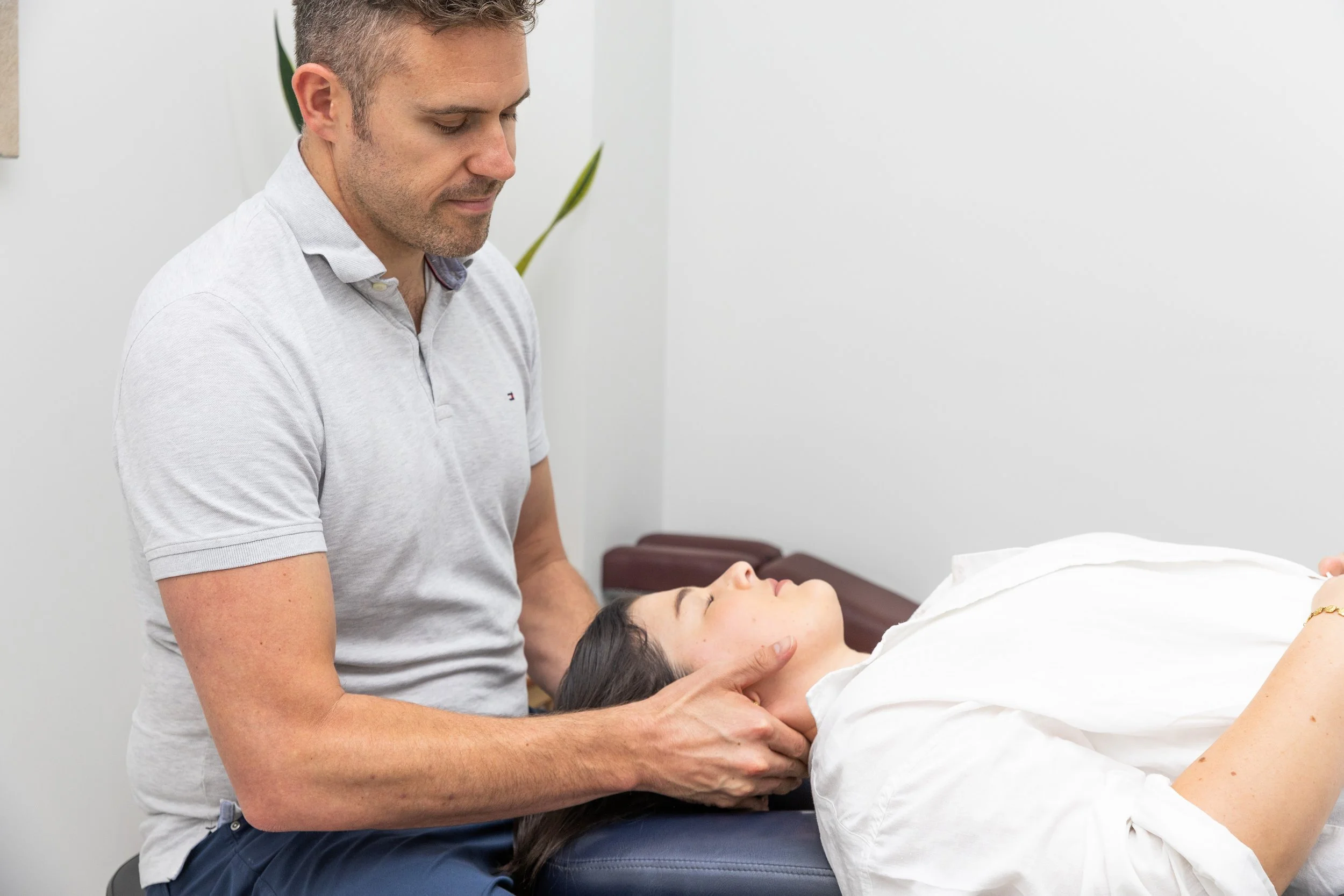
Adhesion Release & Soft Tissue Therapy in Perth
Persistent tightness, stiffness or pain doesn't always mean a muscle needs more stretching.
Sometimes the problem involves how the tissues move against one another. When muscles, fascia or nerves become restricted, certain movements can become uncomfortable, even when the surrounding muscles appear otherwise healthy.
At Southside Spine and Sport in Bicton, we use targeted soft tissue treatment to assess and address restrictions that may be contributing to persistent pain and limited movement.
Adhesion Release: Quick Answers
What is adhesion release therapy?
Adhesion release is a form of targeted manual soft tissue treatment. It uses specific pressure and movement to address restrictions between muscles, fascia, nerves and surrounding tissues.
What are soft tissue adhesions?
Adhesions are areas where tissues may become abnormally connected or restricted, often following injury, inflammation or surgery. Not all persistent tightness or pain is caused by adhesions.
Can adhesions cause nerve pain?
Scar tissue or other structural restrictions can sometimes interfere with normal nerve movement and contribute to irritation. Nerve pain can also arise from many other causes, so assessment is important.
Is adhesion release the same as massage?
No. Massage generally works across broader areas of muscle and soft tissue. Adhesion release uses more specific contact and movement directed towards a suspected restriction.
Does adhesion release hurt?
Treatment can be uncomfortable, particularly when working around sensitive tissues. Pressure and movement should be adjusted according to your symptoms and tolerance.
The Hidden Restriction: What Are Adhesions?
Muscles, nerves and connective tissues need to move relative to one another.
When you bend, twist, stretch or reach, these structures don't simply lengthen. They also slide and move against the tissues around them.
Following injury, surgery or inflammation, scar tissue can sometimes develop and restrict this movement.
In other cases, a patient may experience similar symptoms without a clearly identifiable adhesion. The restriction may involve muscle guarding, sensitivity or changes in movement.
Feeling tight does not necessarily mean a muscle is physically shortened. Persistent tightness can have several contributing causes, which is why identifying the structures involved matters.
Why Do Adhesions Form?
Adhesions and other soft tissue restrictions can develop for several reasons.
- Injury and tissue healing. When tissues are damaged, the body produces new connective tissue as part of the repair process. Sometimes this can alter how neighbouring structures move.
- Surgery. Surgical procedures can produce scar tissue that affects movement between tissue layers.
- Inflammation. Inflammatory processes may contribute to changes in connective tissue and local sensitivity.
- Repetitive loading. Repeated mechanical stress can contribute to tissue irritation and persistent symptoms, although this does not necessarily mean an adhesion has formed.
Not every painful or restricted area contains scar tissue. Our assessment is aimed at determining what structures are involved rather than assuming all tightness is caused by adhesions.
What Conditions May Benefit From Targeted Soft Tissue Treatment?
At Southside Spine and Sport, targeted soft tissue treatment forms part of our approach to several musculoskeletal and nerve-related conditions.
- Persistent neck and upper back tightness
- Lower back and gluteal pain
- Sciatica and other nerve-related symptoms
- Piriformis syndrome and deep gluteal pain
- Cluneal nerve irritation
- Selected shoulder, hip and limb complaints
The presence of one of these conditions does not automatically mean adhesions are responsible. The aim is to identify whether a particular muscle, nerve or surrounding tissue is contributing to the patient's symptoms.
The 'Stuck' Nerve & Muscle Paradox
One of the more interesting presentations we see in clinic involves patients who describe a muscle as constantly tight.
They stretch it, massage it or have it treated, and it feels better temporarily. Then the tightness returns.
Sometimes the muscle itself is not the main problem.
Nerves need to move relative to the surrounding muscles and connective tissue. If a nerve becomes irritated or mechanically sensitive, movements that would ordinarily be comfortable can provoke pain.
This can contribute to protective muscle guarding and a persistent sensation of tightness.
Repeatedly treating a tight muscle may provide temporary relief without addressing all the factors contributing to the symptoms. In these cases, it can be worth reassessing the structures involved rather than simply repeating the same treatment.
How We Assess Soft Tissue Restrictions
Our approach begins with identifying the movements and activities that reproduce your symptoms.
We then assess the structures that could reasonably explain those symptoms, including muscles, tendons, nerves and joints.
This may involve palpation, movement testing and assessment of how symptoms respond to specific positions or mechanical loading.
We are looking for findings that make sense together, rather than simply treating whichever area feels tight.
Our Integrated Treatment Approach
Once we have identified a likely contributing structure, treatment is directed towards that area. We then reassess your symptoms and movement to determine whether the approach is helping.
1. Targeted Soft Tissue Treatment
We apply specific manual contact to the relevant tissues while introducing controlled movement.
Depending on the structure involved, this may include movement of a muscle, joint or nerve relative to the surrounding tissues.
The intention is to improve movement tolerance and reduce symptoms associated with the restriction.
2. Chiropractic Adjustments
Where joint restrictions are contributing to the presentation, chiropractic adjustments may also be appropriate.
However, joint treatment is not automatically necessary for every soft tissue complaint.
3. Shockwave Therapy
Focused or radial shockwave therapy may be included for selected persistent musculoskeletal presentations.
The evidence varies between conditions, and shockwave is not an established method of physically breaking down nerve adhesions.
At Southside Spine and Sport, shockwave therapy is included in our standard consultation fee when clinically appropriate.
Learn more about our Shockwave Therapy.
4. Rehabilitation
Once symptoms are improving, we may introduce exercises and movement strategies to restore strength, mobility and confidence.
The aim is to help patients return to their normal activities without relying indefinitely on passive treatment.
What Should You Expect After Treatment?
Some people experience an immediate improvement in comfort or movement following targeted soft tissue treatment.
Others may experience temporary soreness or sensitivity, particularly when an area has been painful for a long time.
The response varies depending on the underlying condition and the sensitivity of the tissues involved.
We reassess your symptoms and movement throughout treatment to determine whether the approach is helping.
There is no fixed number of treatments required for every patient.
Frequently Asked Questions
Can adhesions be seen on an MRI?
Some forms of scar tissue can be identified with medical imaging, but many suspected soft tissue restrictions cannot be reliably confirmed on routine scans. Clinical examination helps guide assessment, although it cannot definitively prove that an adhesion is present.
Can stretching break down adhesions?
Stretching may improve comfort and movement, but there is limited evidence that ordinary stretching physically breaks down established adhesions. Whether stretching is useful depends on the underlying problem.
Is adhesion release suitable for nerve entrapment?
Targeted manual therapy may be considered as part of conservative care for some nerve-related complaints. However, the treatment approach depends on the nerve involved, the suspected cause and the examination findings.
How many sessions will I need?
This varies. Some patients improve over a small number of appointments, while persistent or complex presentations may require a longer treatment and rehabilitation plan.
Can adhesions come back?
Scar tissue can change over time, and symptoms may recur for several reasons. Recurring pain does not necessarily mean that an adhesion has reformed.
Adhesion Release Treatment in Bicton, Perth
If you have persistent tightness, restricted movement or pain that keeps returning despite previous treatment, a more targeted assessment may help identify the contributing structures.
At Southside Spine and Sport, we combine chiropractic care, targeted soft tissue treatment, shockwave therapy and rehabilitation according to your individual presentation.